

Ling and the Corrupted Hollow
Level Designer | 26 Devlopers | UE 5.6
| 3D Platformer | Chinese Stylized | Environment Puzzle

Game Synopsis
Ling and the Corrupted Hollow is a third-person puzzle-platformer inspired by traditional Chinese underworld mythology. Players control Ling and command spirit companions to possess objects and interact with the environment to solve puzzles, ultimately collecting four soul fragments to restore balance to the corrupted Hollow Woods.
My Role & Ownership
Gameplay Design
Cultural Puzzles
· Thematic Alignment ·
Mechanics Validation
Level Development
Prototyping
· Level Flow ·
Level Building & Refinement
Cross-disciplinary Collaboration
Art Briefs
· Mechanics Requirements ·
Production Support
· File Management ·
Gameplay Design
The project features a strong ancient Chinese theme. When designing gameplay mechanics, we grounded them in traceable traditional cultural customs or culturally symbolic everyday objects and their functional uses in order to preserve affordance and cultural readability, thereby reducing player cognitive load and strengthening environmental immersion.
Cultural Puzzles
Designed puzzle gameplay and stealth combat systems aligned with the project theme, GD vision, and overall game vision.


Thematic Alignment
I proposed multiple thematic directions and outlined corresponding gameplay concepts for each, enabling the GD to select. To support clarity for an international team, I curated reference materials from widely recognized films and games to provide accessible visual and experiential context.
Brainstorming Proposal

Integrating Game Mechanics and Depth

Deepening Level Plan

Mechanics Validation
Designed puzzle gameplay and stealth combat systems aligned with the project theme, GD vision, and overall game vision.

Action Block
Produced action blocks and Whitebox Levels to communicate gameplay structure more efficiently to stakeholders and cross-disciplinary team members.
Level Design
Contributed to the early prototyping of the Garden level and led the full production cycle of Boat Crossing, from initial layout through implementation and iteration.
Prototyping (Garden Level)
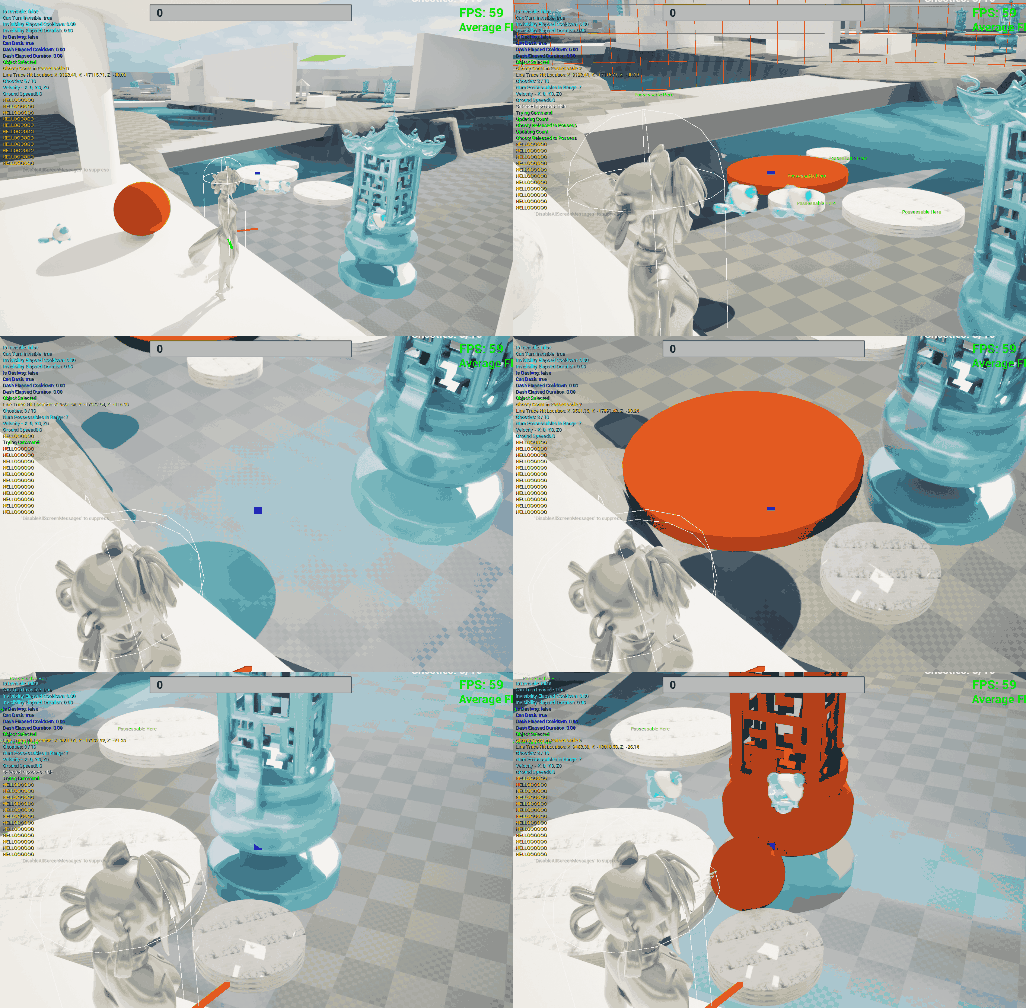
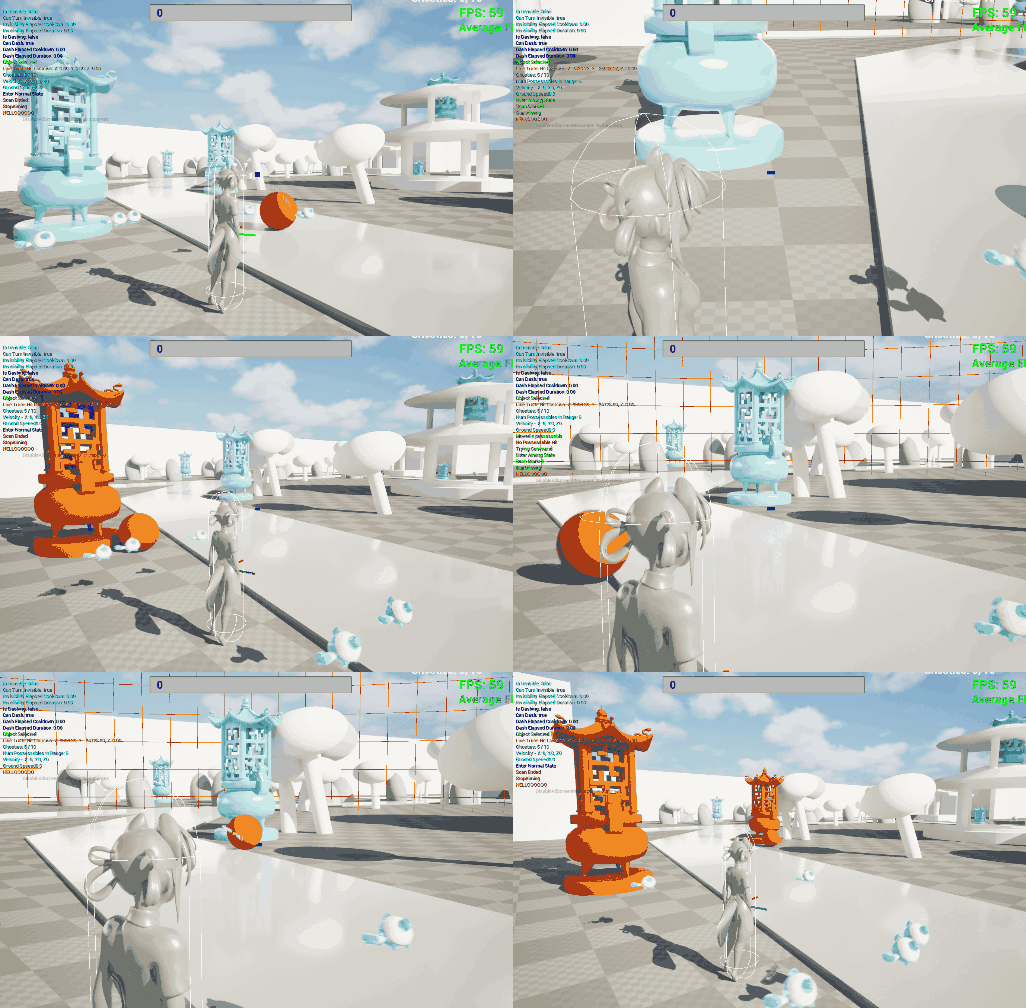
Designed and built the Garden whitebox to validate the core gameplay loop. Worked with the programmer to test the pacing between puzzle-solving and combat.
Designed the half of two Garden level versions inspired by Suzhou’s four classical gardens
Garden Design Version 1

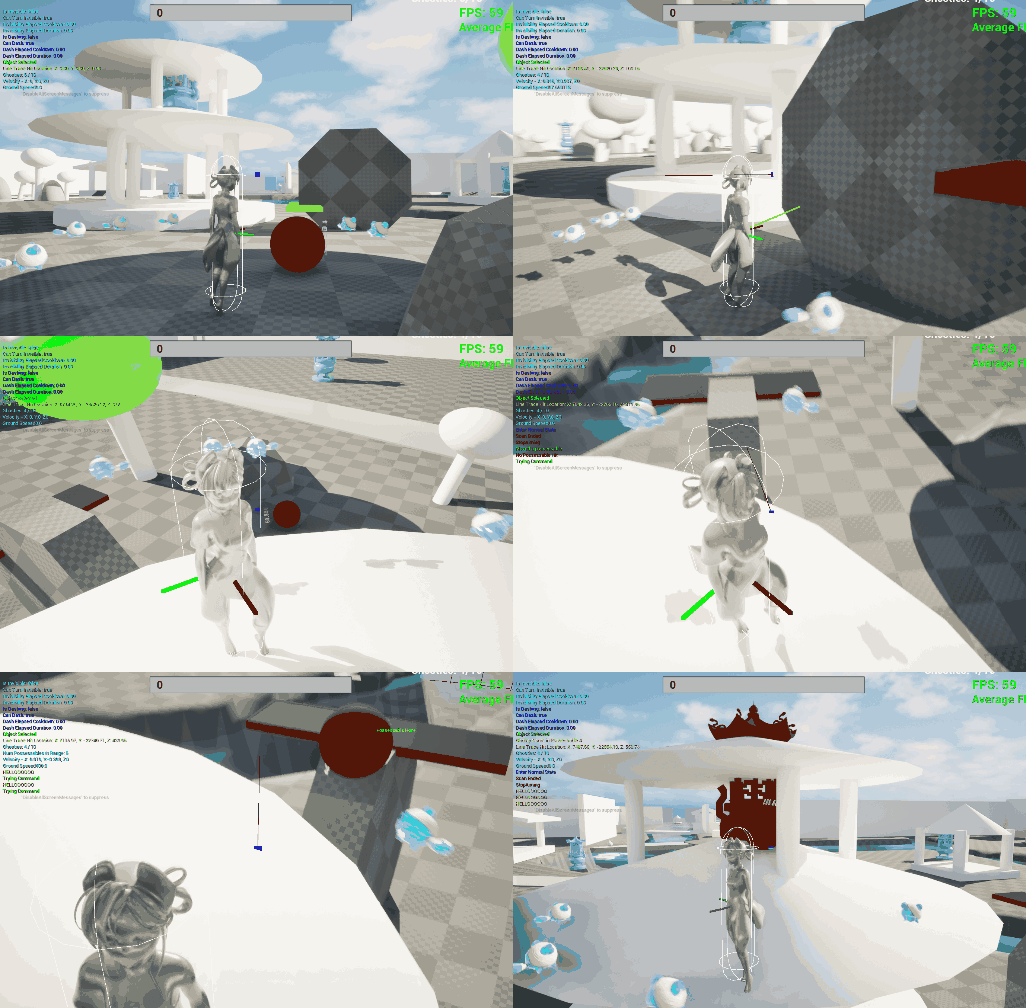
using touring routes to shape the level flow and exploring varied gameplay experiences.
Garden Design Version 2 (Final Deliverable)

Level Flow (Boat Corssing)
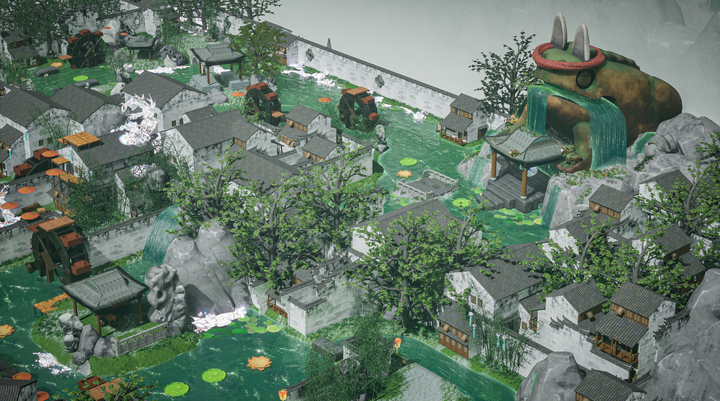
I structured Boat Crossing around a main river channel and branching tributaries. The main channel defined the primary flow and guided players toward the final objective, while each tributary introduced specific gameplay types with increasing difficulty based on the number and combination of mechanics involved.

Level Building & Refinement (Boat Crossing)
Boat Crossing Whitebox
I built the initial whitebox with simple placeholder interactions to demonstrate the intended experience and validate the design direction with stakeholders and the GD.
The first playable integrated basic object-moving functionality from the programmer and early art assets.
Boat Crossing First Playable
The first playable integrated basic object-moving functionality from the programmer and early art assets.
Boat Crossing Final Deliverable

Cross-disciplinary collaboration
The project features a strong ancient Chinese theme. When designing gameplay mechanics, we grounded them in traceable traditional cultural customs or culturally symbolic everyday objects and their functional uses in order to preserve affordance and cultural readability, thereby reducing player cognitive load and strengthening environmental immersion.
Art Briefs
Art briefs included visual references, intended use, interactive component breakdowns, and production priorities.
Mechanics Requirements
Mechanics requirements documented visual references, interaction methods and states, player-state restrictions, and how the interaction changed under different conditions.


Production Support
Proactively communicated issues identified within the team and proposed practical solutions to address them.
File Management
Identified risks caused by inconsistent asset placement and later reorganized the affected files, repaired the resulting issues, and restored the level to a workable state.


Gallery


Postmortem
What Went Well?
-
I have expanded more interesting and playable ACTION on the existing game mechanism.
-
I helped SD with the minimum cost program to change the improvement of the entire gameplay experience.
-
At each stage, I tried to make my levels be more comfortable and simpler to players, instead of being confused and simple in the level.
What Went Wrong?
-
My computer is damaged, resulting in slow progress.
-
The part of the repeated operation of Level5 Part2 belongs to the step that can be improved from the design.
-
I need to understand the situation before asking questions.
What I Learned?
-
When we receive a Feedback, testers are usually a suggestion based on his feelings, and the best solution is likely not the direction of the tester.
-
The method to find the lowest cost can reach the maximum benefits.
-
I will inform PEER in advance which part of the PEER is doing at work, which can avoid the Preforce conflict